
Utilities Run Underground for a Reason
Trenching & Utility Installation in Central Pennsylvania for water line connections, electric service extensions, and gas line installations during site preparation
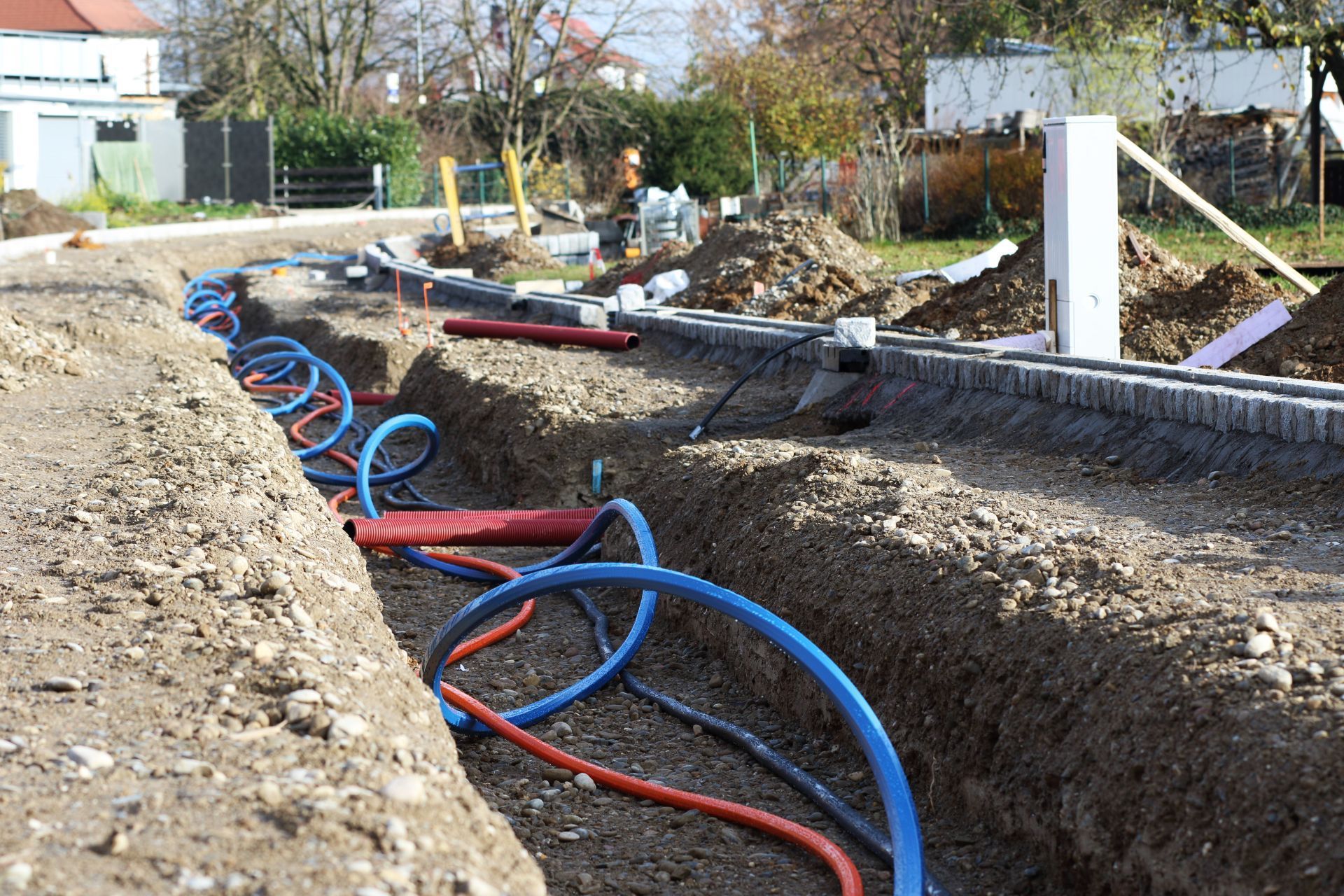
Deiblers Gap Excavating provides trenching and utility installation in Lykens and nearby communities for homeowners, builders, and contractors who need underground infrastructure placed at the correct depth and protected from future damage. You need trenching when you are building a new home, extending service to an outbuilding, or upgrading utilities that currently run above ground or too shallow. The trench must follow utility codes, avoid existing lines, and provide stable bedding for pipe or conduit.
The work involves excavating narrow trenches for water lines, electric conduit, gas pipe, or communication cable. We dig to the depth required by local codes and the type of utility being installed, set the trench width to allow safe placement and backfill, and coordinate timing with the contractors or utility providers who will run the actual lines. Trenching is often one of the first steps in site preparation, completed after clearing and rough grading but before foundation or paving work begins.
If you are planning new construction or a property upgrade that requires underground utilities, include trenching in your site preparation plan and schedule the work early to avoid delays.
What Precision Trenching Provides for Your Build
You will see clean, straight trenches that follow planned routes and maintain consistent depth. Water lines are buried below frost depth to prevent freezing. Electric conduit runs deep enough to protect against accidental damage from future digging. Gas lines follow strict spacing and depth requirements. We use excavation equipment sized to match the trench width, reducing soil disturbance and making backfill easier once utilities are in place.
After utilities are installed by licensed contractors, Deiblers Gap Excavating returns to backfill the trench with soil compacted in layers. You will notice the surface settles evenly without dips or soft spots that could cause problems later. Trenching services are used across residential lots, farmland, and commercial sites where infrastructure must reach buildings, wells, or connection points some distance from the main road.
Trench depth and width vary depending on what you are installing. Water lines may require four feet of cover, while communication conduit may need only two. We verify utility locations before digging and mark the trench route to avoid conflicts with septic systems, existing lines, or drainage features. This work does not include running the actual utilities or obtaining permits, but it does provide the excavation and backfill that make installation possible.
Questions Builders and Homeowners Ask Before Trenching Begins
The answers below address timing, coordination, and what happens once trenches are open.
What happens if a trench is dug too shallow for the utility being installed?
Shallow trenches expose pipes and conduit to frost heave, accidental damage, and code violations that may require costly rework before inspections pass.
How do you coordinate trenching with utility providers and contractors?
We schedule excavation to align with your project timeline and leave trenches open only as long as necessary to allow installation crews to work safely and efficiently.
When should trenching be completed during the construction process?
Trenching is typically scheduled after clearing and rough grading but before foundation work or paving, so utilities are in place when other trades need them.
Why does backfill compaction matter for long-term site stability?
Loose backfill settles over time and creates depressions that collect water, crack pavement, or damage surface features, while compacted fill stays stable under load.
How long does trenching take for a typical residential utility installation in Lykens?
Most residential trenches are completed in one to two days, depending on trench length, soil type, and how many utilities share the same route.
Deiblers Gap Excavating works with builders, homeowners, and contractors across the region who need reliable trenching that meets code requirements and keeps projects on schedule. If you are planning site work that includes underground utilities, reach out to discuss trenching options and timing.